EVENA
First month half price, $34.50  ·  Free shipping  ·  Cancel anytimeFirst month $34.50 · cancel anytime
EVENA® Start · $34.50
EVENA®
60-day money-back guarantee · Ships free from the EU
Dark spots · melasma · hyperpigmentation

Get rid of dark spots.
Once and for all.

For olive, brown and deep skin, tones III to VI.Dark spots have three causes. Serums treat one. EVENA treats all three, in two minutes a day.

Then $69/month · Free shipping · Cancel anytime · 60-day guarantee

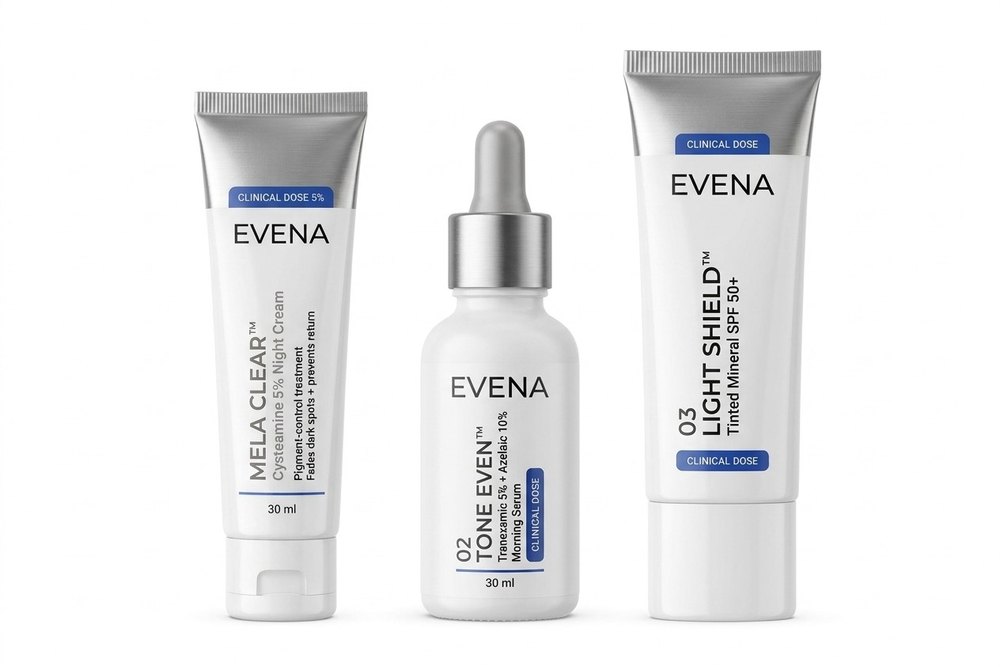
The EVENA box open: the night cream, the morning serum and the tinted sunscreen in their tray, the lid with the formula table propped behind
6randomised clinical trials behind the formula
+16 ptsmore fading with tinted SPF than clear SPF, same treatment1
0hydroquinone, retinoids or peels
Week 4first visible change
Key benefits

What changes, and what does not.

Dark spots and melasma fade

Visible by week 4. Most of the fading is done by week 16.

New spots stop forming

The signal from underneath is blocked and daylight stops re-darkening them.

Your skin tone stays yours

Nothing bleaches the skin around the spot. Nothing strips the barrier.

One box, two minutes

Night cream, morning serum, tinted SPF. Delivered every 30 days.

Timings are from the referenced trials of each ingredient. Individual results vary.

01 · The problem

Dark spots have three causes. Serums treat one.

Two bottles of the serum everyone recommends, and nothing changed. It isn't you. On olive, brown and deep skin, three things keep a dark spot alive. Treat one and the other two bring it back.

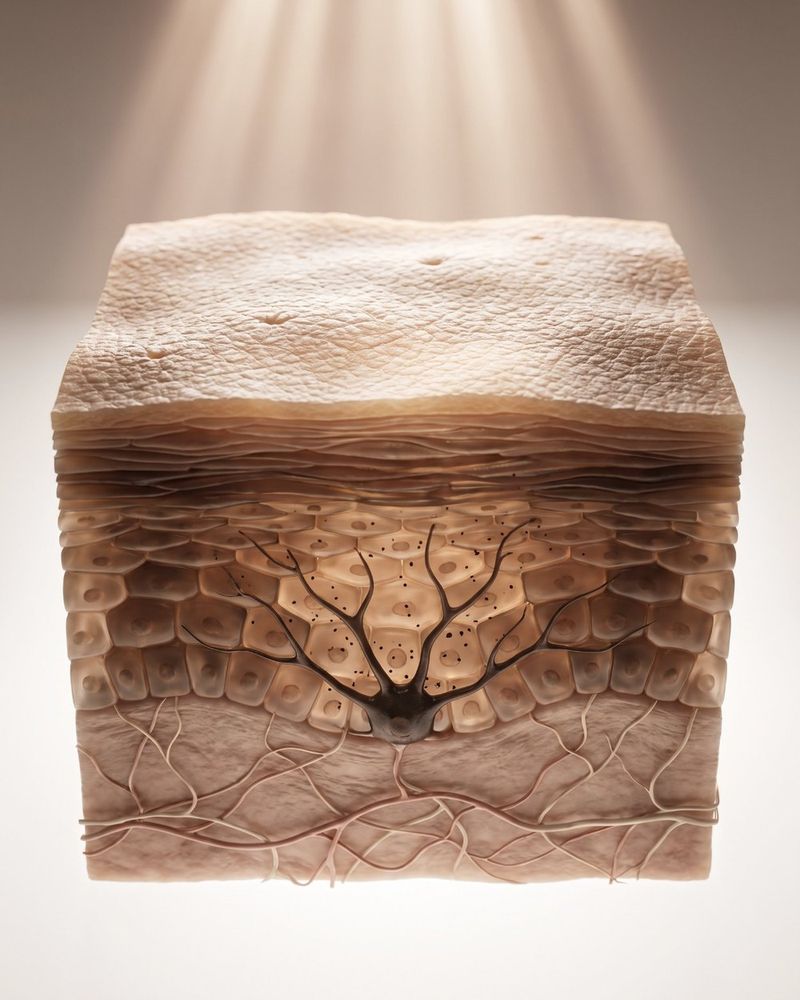
Photorealistic cross-section of medium-deep skin: light falling on the surface, a pigment cell with its branches in the upper skin, blood vessels in the deeper skin 03 01 02
  1. Cause 01

    Pigment cells over-producing

    Inside the spot, the pigment cells make too much. This is the only cause most serums treat, usually at half the trial dose.

  2. Cause 02

    A signal from underneath

    Hormones and small blood vessels in the deeper skin tell those cells to keep going. Serums don't reach it, so the spot re-forms from below.

  3. Cause 03

    Daylight, every day

    Visible light, not just UV, re-darkens the spot on olive, brown and deep skin.7 Clear sunscreen only blocks UV.

02 · Who it's for

Olive, brown and deep skin.
Skin tones III to VI.

South Asian, Latina, Middle Eastern and North African, Southeast and East Asian, Black, mixed and Mediterranean skin. What the studies show about your tone.

North African woman with olive skin

Olive

Tone III · Mediterranean, Middle Eastern, North African, East Asian

A mark from ordinary daylight can last three months. No sunburn needed.11

Duteil 2014

Your shade · 01 Medium

Latina woman with medium-brown skin

Brown

Tone IV · South Asian, Latina, Middle Eastern, Southeast Asian, mixed

Up to 1 in 3 women have melasma in some brown-skin populations, the highest rates measured anywhere.9

Handel 2014 · Davis & Callender 2010

Your shade · 02 Medium-deep

Black woman with deep brown skin

Deep

Tones V to VI · Black, Afro-Caribbean, deepest South and Southeast Asian

Hydroquinone can permanently stain deep skin blue-black with long use.14 EVENA uses none.

Levin & Maibach 2001

Your shade · 03 Deep or 04 Rich

This is for you if
  • Your skin is olive, brown or deep, tones III to VI
  • Spots on the cheeks, upper lip, mouth or forehead
  • Serums, peels or hydroquinone didn't hold
Not for you if
  • Under-eye darkness that fades when you stretch the skin
  • Redness or broken capillaries
  • Active acne. Treat that first, then the marks

Fair skin with melasma? It still works. The actives don't care about tone; the sunscreen shades simply start at olive.

03 · The solution

Three products. One two-minute routine. All three causes.

Each product treats one cause, at the dose used in its clinical trial. Hover a product to see its texture.

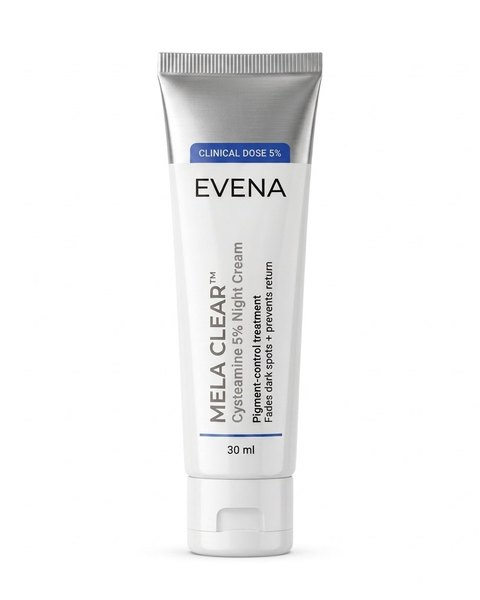
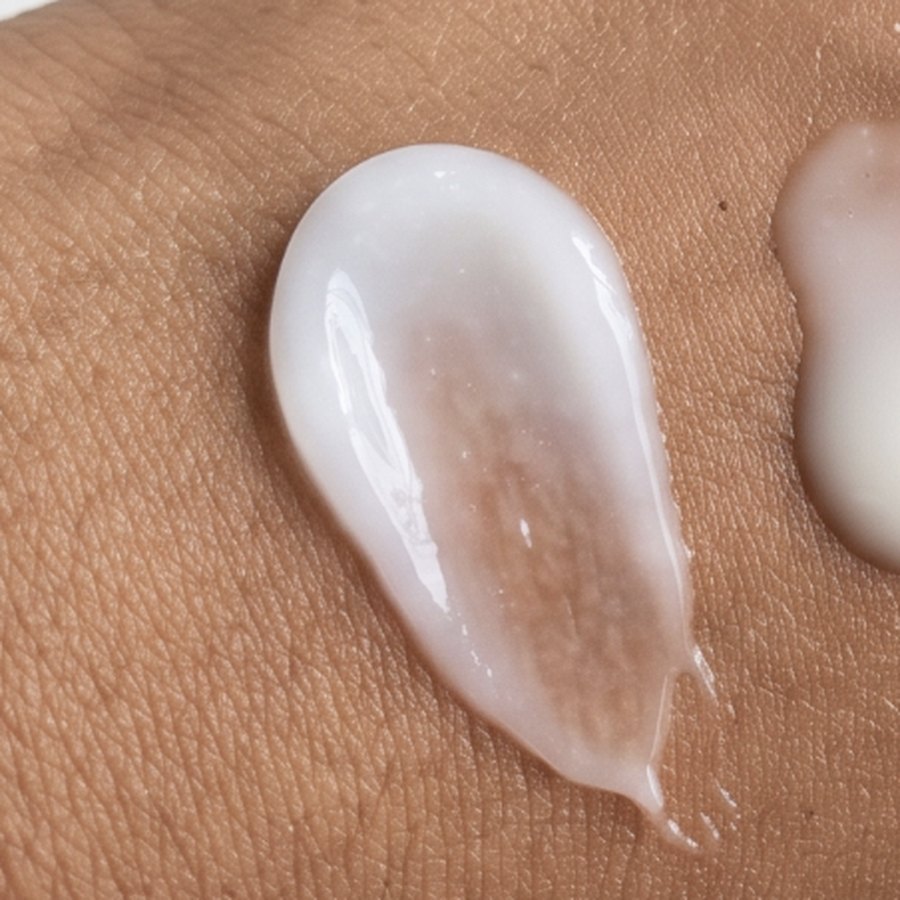
01, the night cream01 texture on skin
01 · Night · 15 minutes, then rinse

Night cream, cysteamine 5%

Treats cause 01. Lowers pigment production: hydroquinone’s effect without its bleaching or rebound. Apply to clean skin, leave 15 minutes, rinse off. Nothing strong stays on overnight.

Treats
Cause 01 · over-production
Active
Cysteamine 5%
Use
Every night · 3 nights a week after week 16
Texture
Light gel-cream · 30 ml
Evidence
Up to 59% less visible after 16 weeks2
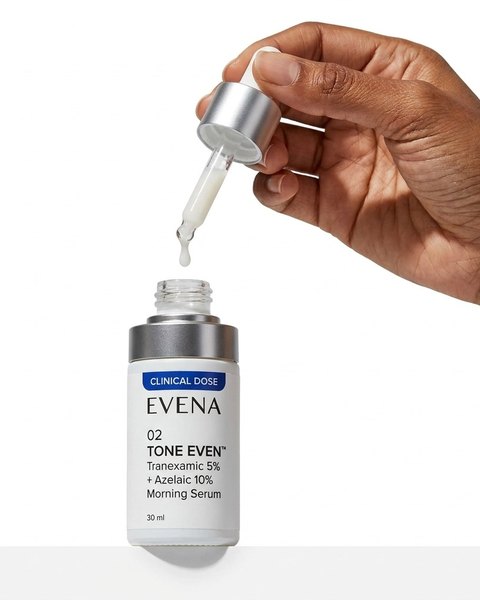
02, the morning serum, a drop falling from the pipette02 texture on skin
02 · Morning · leave on

Morning serum, tranexamic acid 5%, azelaic acid 10%, niacinamide 5%

Treats cause 02. Tranexamic acid blocks the signal from underneath, azelaic acid calms the inflammation that leaves marks, niacinamide stops pigment spreading and rebuilds the barrier. Four drops on the spots and around them.

Treats
Cause 02 · the signal from underneath
Actives
TXA 5% · azelaic 10% · niacinamide 5%
Use
Every morning, under the sunscreen
Texture
Milky serum · 30 ml
Evidence
Hydroquinone results without hydroquinone: 46% less visible after 12 weeks, head to head4
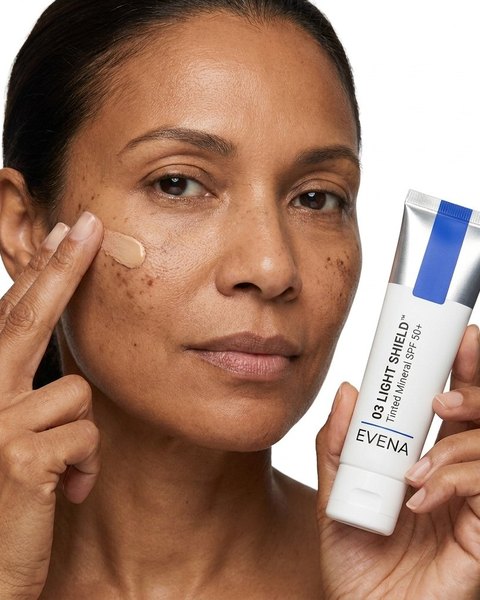
03, the tinted sunscreen blending into medium brown skin03 texture on skin
03 · Morning · over the serum

Tinted mineral sunscreen SPF 50+, zinc oxide and iron oxides

Treats cause 03. Iron oxides are the only sunscreen ingredient that blocks visible light, the daylight that re-darkens spots. Four shades from olive to deep, no white cast.

Treats
Cause 03 · daylight
Actives
Zinc oxide · iron oxides 3.5%
Use
Every morning, whole face · again at midday outside
Texture
Sheer tinted cream · 50 ml · 4 shades
Evidence
Tinted SPF 78% fading vs clear SPF 62%, same treatment1
NightCream, 15 minutes, rinse
MorningSerum, then sunscreen
After week 16Same box; the night cream drops to three nights a week
Sensitive skin?

Built for it.

Nothing that peels or strips

No hydroquinone, retinoid, acid peel or fragrance.

The strong step is rinsed off

The night cream is on for 15 minutes, then washed off.

The serum rebuilds your barrier

5% niacinamide strengthens the barrier while the actives work. Reactive skin: every other night for two weeks.

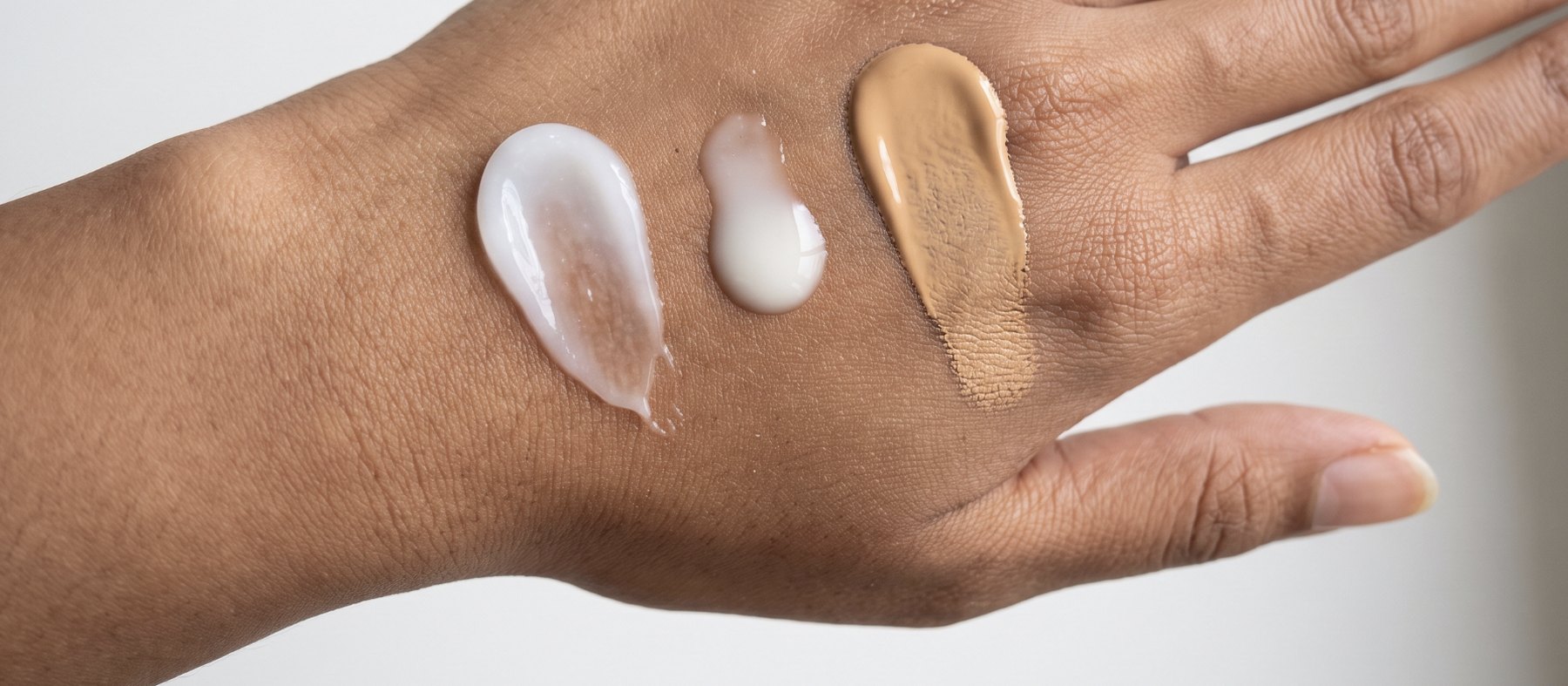
The three textures on olive, brown and deep skin: the night cream, the morning serum and the tinted sunscreen blended in
01 · night cream, rinsed off after 15 minutes02 · morning serum, left on03 · tinted sunscreen, no white cast
04 · The science

Not a promise. Six randomised clinical trials.

Every number on this page comes from a peer-reviewed trial of the ingredient at the dose EVENA uses, listed in the trial register below with journal, size and duration.

−59% less visible

Melasma after 16 weeks of cysteamine 5% vs placebo.

Mansouri 2015 · Farshi 20182
−46% less visible

Hydroquinone results without hydroquinone: 12 weeks of tranexamic acid 5%, head to head.

Banihashemi 20154
+16points

Extra fading with a tinted mineral sunscreen instead of a clear one.

Castanedo-Cazares 20141
0hydroquinone

No risk of the permanent staining hydroquinone can leave on deep skin.

Levin & Maibach 200114

Same treatment. Only the sunscreen changed.

How much melasma faded in 8 weeks1 RCT · double-blind · n=68 · 8 wk

Clear SPF 50, blocks UV only
62%
Tinted mineral SPF 50, blocks UV and visible light
78%

Castanedo-Cazares et al. 2014 · 68 women with melasma, skin tones III to V

Olive, brown and deep skin, not fair skin

Visible light left lasting marks on skin types IV to VI, none on type II.

Mahmoud et al. 20107
Fewer relapses

Blocking visible light cut melasma relapses in the months after.

Boukari et al. 20158
Trial register
IngredientStudyDesignnDurationResult
Cysteamine 5%Mansouri 20152RCT · double-blind · placebo5016 wkMelasma score roughly halved vs placebo, no bleaching of surrounding skin
Cysteamine 5%Farshi 20183RCT · placebo4016 wkSignificant fading vs placebo, measured by colorimeter
Tranexamic acid 5%Banihashemi 20154RCT · vs hydroquinone 4%6012 wk46% vs 45% fading, equal to hydroquinone with fewer side effects
Niacinamide 4%Navarrete-Solís 20115RCT · split-face · vs hydroquinone278 wkComparable to hydroquinone, markedly fewer side effects
Azelaic acid 20%Baliña & Graupe 19916RCT · vs hydroquinone 4%32924 wkMatched hydroquinone 4% over 24 weeks
Tinted SPF (iron oxides)Castanedo-Cazares 20141RCT · double-blind · tinted vs clear688 wkTinted SPF 78% fading vs clear SPF 62%, same treatment
Visible lightMahmoud 20107Controlled exposure study202 wkLasting pigment on skin types IV to VI, none on type II
Visible-light SPFBoukari 20158Prospective randomised406 moFewer melasma relapses with visible-light protection

n = participants. Trials are of the ingredients at the doses shown. EVENA's own study of the full routine is in progress.

Compared withEVENA"Dark spot" serumsPrescription hydroquinoneLaser / IPL
Treats all three causesYesOne, sometimes twoOneRemoves pigment, leaves the causes
Blocks visible light, not just UVYes
Safe to keep using on brown and deep skinYesUsually3 to 5 months maximumrisk of permanent stainingOften makes it darkeron deeper skin
Stays goneWhile you keep the routineRarelyComes back when you stopOften comes back
What it costs$69 / montheverything, delivered$60 to 150 / monthacross 2 to 4 products$60 to 150 + doctor visits$1,500 to 4,000+per course
Treats all three causesYesCompare
SerumsOne, sometimes two
HydroquinoneOne
LaserRemoves pigment, leaves the causes
Blocks visible light, not just UVYesCompare
SerumsNo
HydroquinoneNo
LaserNo
Safe to keep using on brown and deep skinYesCompare
SerumsUsually
Hydroquinone3 to 5 months maximum, risk of permanent staining
LaserOften makes it darker on deeper skin
Stays goneWhile you keep the routineCompare
SerumsRarely
HydroquinoneComes back when you stop
LaserComes back
What it costs$69 / month, everythingCompare
Serums$60 to 150 / month across 2 to 4 products
Hydroquinone$60 to 150 + doctor visits
Laser$1,500 to 4,000+ per course
05 · Results

Fading by week 4. Clear by week 16.

What twelve weeks look like on olive, brown and deep skin.

Weeks 1 to 2
Spots stop getting darker

The sunscreen blocks visible light from day one.

Weeks 3 to 6
First visible fading

Edges fade first, then the centre.

Weeks 7 to 12
Clearly faded

Spots close to your surrounding skin tone.

Weeks 13 to 16
Clear

Most of the fading is done.

Week 17+
Kept clear

Same box; the night cream drops to three nights a week.

Sources

Every number above is from a peer-reviewed trial.

Six randomised trials of the exact actives at the exact doses, run on olive, brown and deep skin, published in the journals below. The full register with authors, sizes and durations is at the bottom of the page.

British Journal of DermatologyJournal of the American Academy of DermatologyJournal of Investigative DermatologyJournal of Cosmetic DermatologyInternational Journal of DermatologyPhotodermatology, Photoimmunology & Photomedicine
06 · What you get

The last dark spot and hyperpigmentation treatment you'll ever need.

One box a month: the night cream, the morning serum, the sunscreen in your shade and the week-by-week card. $34.50 for the first month, then $69. Cancel anytime.

The EVENA box open: the three products fitted in their tray
Same three products, same price, every month. Nothing to re-order.
EVENA, monthly

One subscription. Everything you need, delivered.

$34.50first monththen $69 / month · free shipping · cancel anytime
  • 01
    Night cream, cysteamine 5%30 ml · 15 minutes before bed, then rinsed off
  • 02
    Morning serum, tranexamic acid 5%, azelaic acid 10%, niacinamide 5%30 ml · four drops every morning, left on
  • 03
    Tinted mineral sunscreen SPF 50+, in your shade50 ml · whole face every morning · blocks visible light
  • +
    The week-by-week cardWhat to do each day, and what to expect when
Your sunscreen shade 02 · Medium-deep

Pay in full, or 4 interest-free payments Klarna · Afterpay · Apple Pay · PayPal

Ships every 30 days from the EU · Pause, skip or cancel in two clicks · No minimum term

Money-back guarantee: if your spots haven't visibly faded by day 60, we refund everything you've paid.
CPNP notified · EUISO 22716 manufacturingFragrance-freeHydroquinone-freeClinical-trial dosesMade in the EU

Sixty days. Money back.

Use it as directed for sixty days. Not visibly faded? We refund everything you've paid.

Start for $34.50
Questions

Questions, answered straight.

Anything not here, ask. A dermatology nurse answers within a day.

I don't know if mine is melasma or "just" dark spots. Does it matter?

No. Melasma, sun spots and the marks acne leaves behind all come from the same three causes, in different proportions. Patches on the cheeks, upper lip, around the mouth or forehead that get worse with sun, heat or hormones are melasma and take the full 16 weeks. Sun spots and acne marks usually fade faster.

Who exactly is it for?

Olive, brown and deep skin, tones III to VI. That means South Asian, Latina, Middle Eastern and North African, Southeast and East Asian, Black, mixed and Mediterranean skin. If you're fair-skinned with melasma it will still work; the sunscreen shades simply start at olive.

Is it safe on olive, brown and deep skin?

It was designed for it. No hydroquinone, no retinoid, no peel: the ingredients most likely to make dark spots worse on deeper skin are left out. The night cream is on for 15 minutes, then rinsed off. The sunscreen is tinted to four shades from olive to deep, so it disappears instead of turning grey.

Why three products and not one serum?

Because one bottle can't do three opposite jobs. The night cream has to go on and be rinsed off. The sunscreen has to stay on all day and be tinted. The serum sits in between. Put them in one bottle and each job gets done badly, which is what you've been buying. So it is three products, but one two-minute routine, and it arrives as one box.

Will it irritate sensitive skin or damage my skin barrier?

No acids that peel, no retinoid, no hydroquinone, no fragrance. The night cream is rinsed off after 15 minutes. The serum contains 5% niacinamide precisely to strengthen your barrier while the other actives work. If your skin is reactive, use the night cream every other night for the first two weeks; the card shows you how.

What about dark circles under the eyes?

Gently stretch the skin under your eye. If the darkness stays, it is pigment, and the serum and the sunscreen can be used there. If it fades, it is shadow or blood vessels. No cream fixes that, and we would rather tell you than sell to you.

Can I use it while pregnant or breastfeeding?

Use the morning serum and the sunscreen: tranexamic acid, azelaic acid, niacinamide and a mineral sunscreen are all routinely used in pregnancy. Skip the night cream until after breastfeeding, and check with your doctor as you would with any skincare.

Does anything change over time, and do I have to stay subscribed?

What arrives never changes: the same three products, at the same price, on the same day. After week 16 you use the night cream three nights a week instead of every night. That is the only difference. Pause, skip or cancel from your account in two clicks; there is no minimum. Most people stay because stopping is how the spots come back.

Will it change the colour of the rest of my face?

No. Nothing in it bleaches skin. The actives bring over-active pigment cells back down to normal. Your colour stays your colour; it just stops being interrupted by spots.

References
  1. Castanedo-Cazares JP et al. Near-visible light and UV photoprotection in the treatment of melasma: a double-blind randomized trial. Photodermatol Photoimmunol Photomed 2014;30:35–42.
  2. Mansouri P et al. Evaluation of the efficacy of cysteamine 5% cream in the treatment of epidermal melasma: a randomized double-blind placebo-controlled trial. Br J Dermatol 2015;173:209–217.
  3. Farshi S et al. Efficacy of cysteamine cream in the treatment of epidermal melasma, evaluating by Dermacatch as a new measurement method. J Dermatolog Treat 2018;29:182–189.
  4. Banihashemi M et al. Comparison of therapeutic effects of liposomal tranexamic acid and conventional hydroquinone on melasma. J Cosmet Dermatol 2015;14:174–177.
  5. Navarrete-Solís J et al. A double-blind, randomized clinical trial of niacinamide 4% versus hydroquinone 4% in the treatment of melasma. Dermatol Res Pract 2011;2011:379173.
  6. Baliña LM, Graupe K. The treatment of melasma: 20% azelaic acid versus 4% hydroquinone cream. Int J Dermatol 1991;30:893–895.
  7. Mahmoud BH et al. Impact of long-wavelength UVA and visible light on melanocompetent skin. J Invest Dermatol 2010;130:2092–2097.
  8. Boukari F et al. Prevention of melasma relapses with sunscreen combining protection against UV and short wavelengths of visible light: a prospective randomized comparative trial. J Am Acad Dermatol 2015;72:189–190.
  9. Handel AC, Miot LDB, Miot HA. Melasma: a clinical and epidemiological review. An Bras Dermatol 2014;89:771–782.
  10. Ortonne JP et al. A global survey of the role of ultraviolet radiation and hormonal influences in the development of melasma. J Eur Acad Dermatol Venereol 2009;23:1254–1262.
  11. Duteil L et al. Differences in visible light-induced pigmentation according to wavelengths: a clinical and histological study in comparison with UVB exposure. Pigment Cell Melanoma Res 2014;27:822–826.
  12. Kohli I et al. Synergistic effects of long-wavelength ultraviolet A1 and visible light on pigmentation and erythema. Br J Dermatol 2018;178:1173–1180.
  13. Davis EC, Callender VD. Postinflammatory hyperpigmentation: a review of the epidemiology, clinical features, and treatment options in skin of color. J Clin Aesthet Dermatol 2010;3:20–31.
  14. Levin CY, Maibach H. Exogenous ochronosis: an update on clinical features, causative agents and treatment options. Am J Clin Dermatol 2001;2:213–217.
$34.50 first monthShade 02 · Medium-deep · then $69/mo